

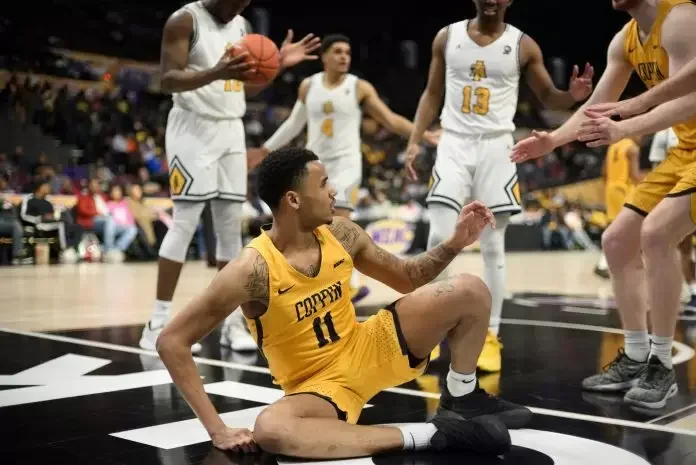
In modern basketball, injuries rarely strike without warning, yet they consistently disrupt seasons and careers. Dr. Abhinav Gautam, a regenerative care physician and founder of Nuoro, believes the solution lies in a system many athletes overlook: fascia.
Gautam’s work has been utilized by elite athletes across multiple sports, including Candace Parker and Joe Johnson, focusing on restoring movement rather than treating isolated pain. His approach centers on how the body distributes force, a principle that directly aligns with basketball’s demands for cutting, deceleration, and explosive changes of direction.

In an exclusive interview with TalkBasket.net, Gautam explained how common basketball injuries often originate far from the site of pain.
“These injuries are frequently related to fascia as expressions of a system problem. Fascia is the body’s connective network; it stores elastic energy, transmits force, and coordinates movement. When fascia loses its ability to glide, force gets redistributed into a weak link, such as the ankle, knee, or back. The pain appears in one place, but the restriction often resides elsewhere.”
That concept reframes how injuries should be assessed, particularly in a sport where repetitive load and asymmetry are constant. Instead of focusing solely on strengthening a joint, Gautam emphasizes movement efficiency as the foundation of durability.
“It’s important to view and treat the body as an integrated system. Players should prioritize movement quality—especially rotation, deceleration, and symmetry—over just strength. Injury risk increases if range of motion is uneven or mechanics break down under fatigue. Daily habits should include restoring tissue quality through hydration, recovery work, and retraining clean movement patterns.”
The warning signs, according to Gautam, often appear well before a major injury occurs. In a league where players frequently push through discomfort, those signals can be missed.
“Injuries rarely come out of nowhere. Early signs include loss of explosiveness, reduced single-leg stability, asymmetrical loading, and difficulty decelerating. If you feel tight again shortly after warming up, or your movement feels blocked on one side, that’s a red flag. For the Achilles specifically, you’re looking at the entire elastic system. If that system isn’t absorbing and returning force efficiently, the tendon is at risk.”
Those indicators are particularly relevant given the rise in lower-body injuries across basketball, where the ability to absorb force is as important as generating it. Gautam’s method focuses on restoring that balance at a structural level.
“We aim to restore fascia as a functional system. That means rehydrating tissue, restoring glide between layers, and decompressing irritated neural interfaces, then immediately retraining movement so the body adopts those changes. We also use imaging like ultrasound to assess fascia movement in real time, combined with motion analysis. It allows us to intervene before tissue failure to prevent injury.”
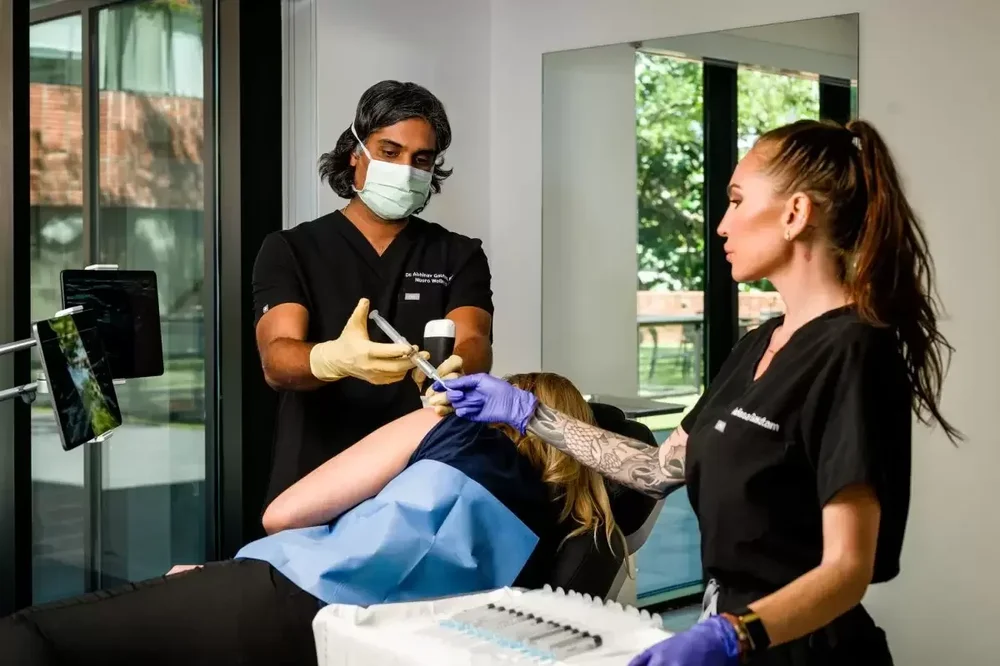
From a basketball perspective, this emphasis on prevention could shift how teams manage player workloads and recovery cycles. Instead of reacting to injuries, Gautam envisions a future built on early detection and system-wide monitoring.
“The future is predictive and systems-based. We’re moving toward identifying breakdown before pain appears. We can do this by tracking fascial glide, movement asymmetries, and load tolerance. Treatment will become more precise, combining regenerative approaches with neuromuscular retraining. We don’t want to be solely reactive when we have the ability to engineer resilience and keep athletes performing at a high level without interruption.”
As the physical demands of basketball continue to rise, the margin for error narrows. Gautam’s perspective underscores the need for a proactive approach to athlete health.